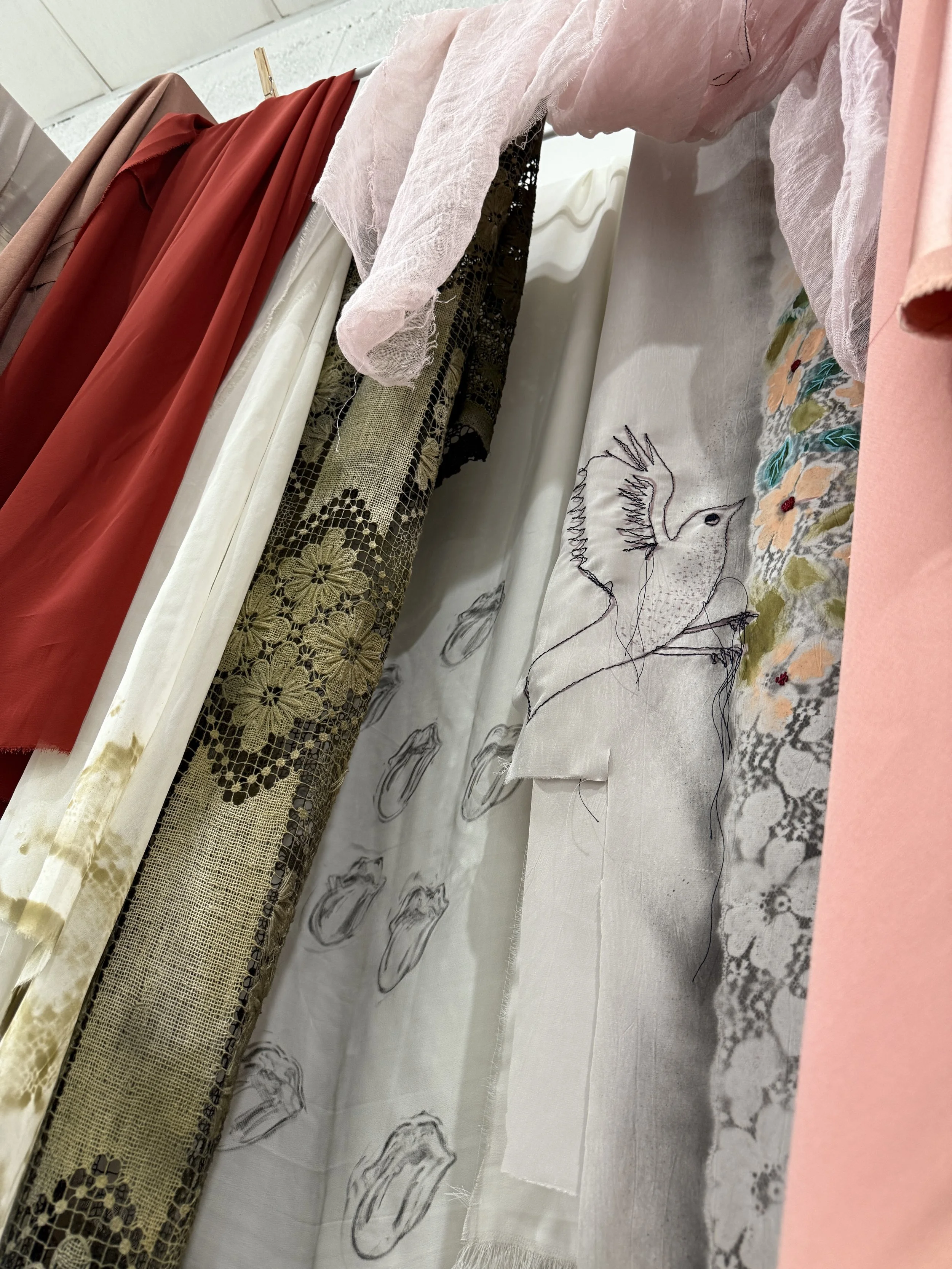
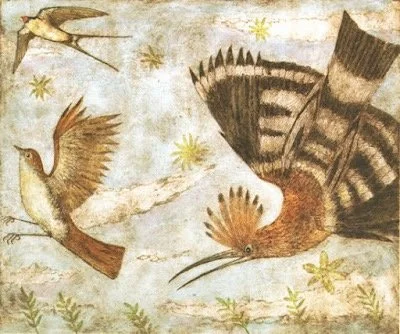
Studio progress - DEMO "Three Weavers: Penelope, Arachne, Philomela."
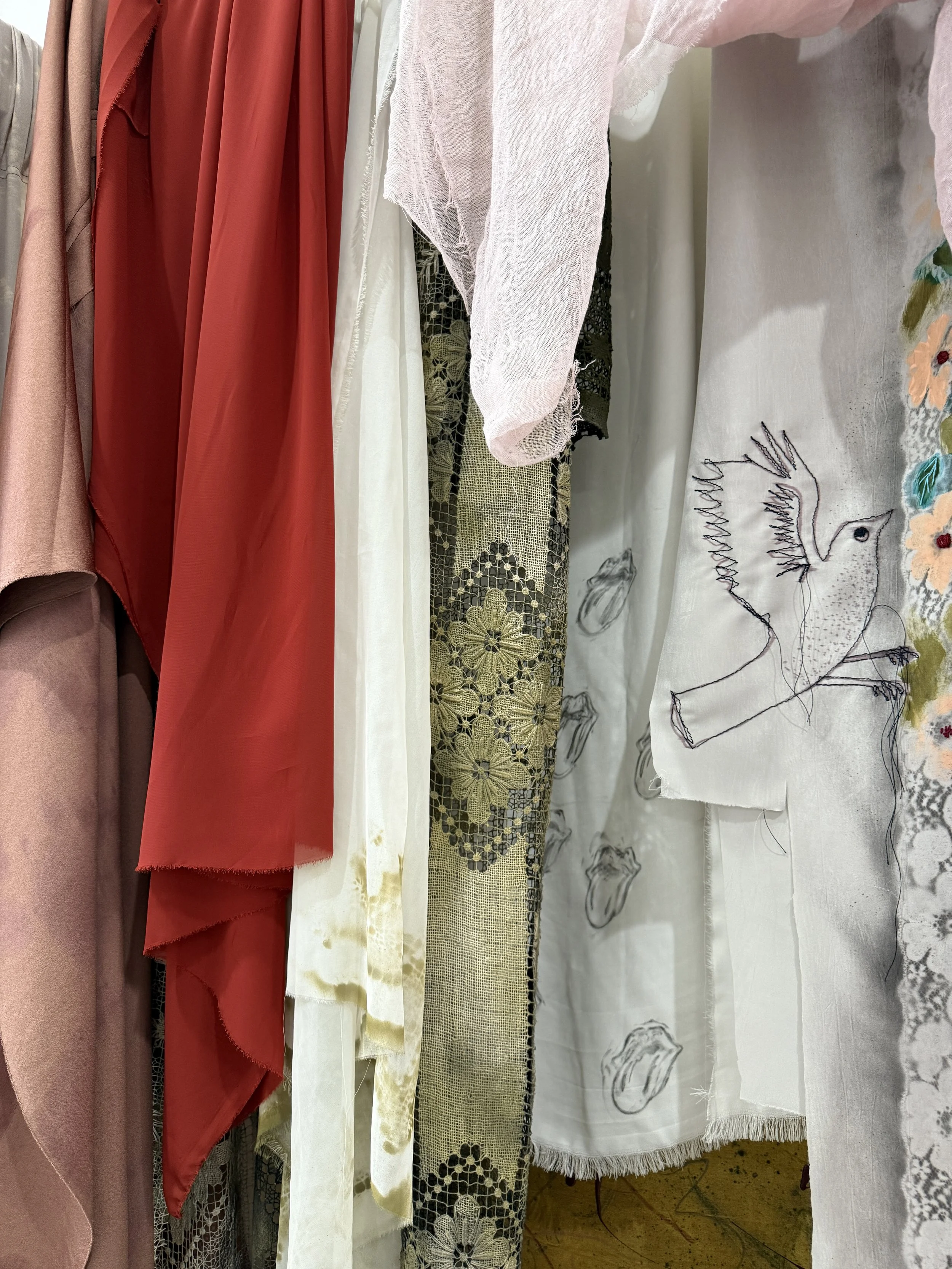
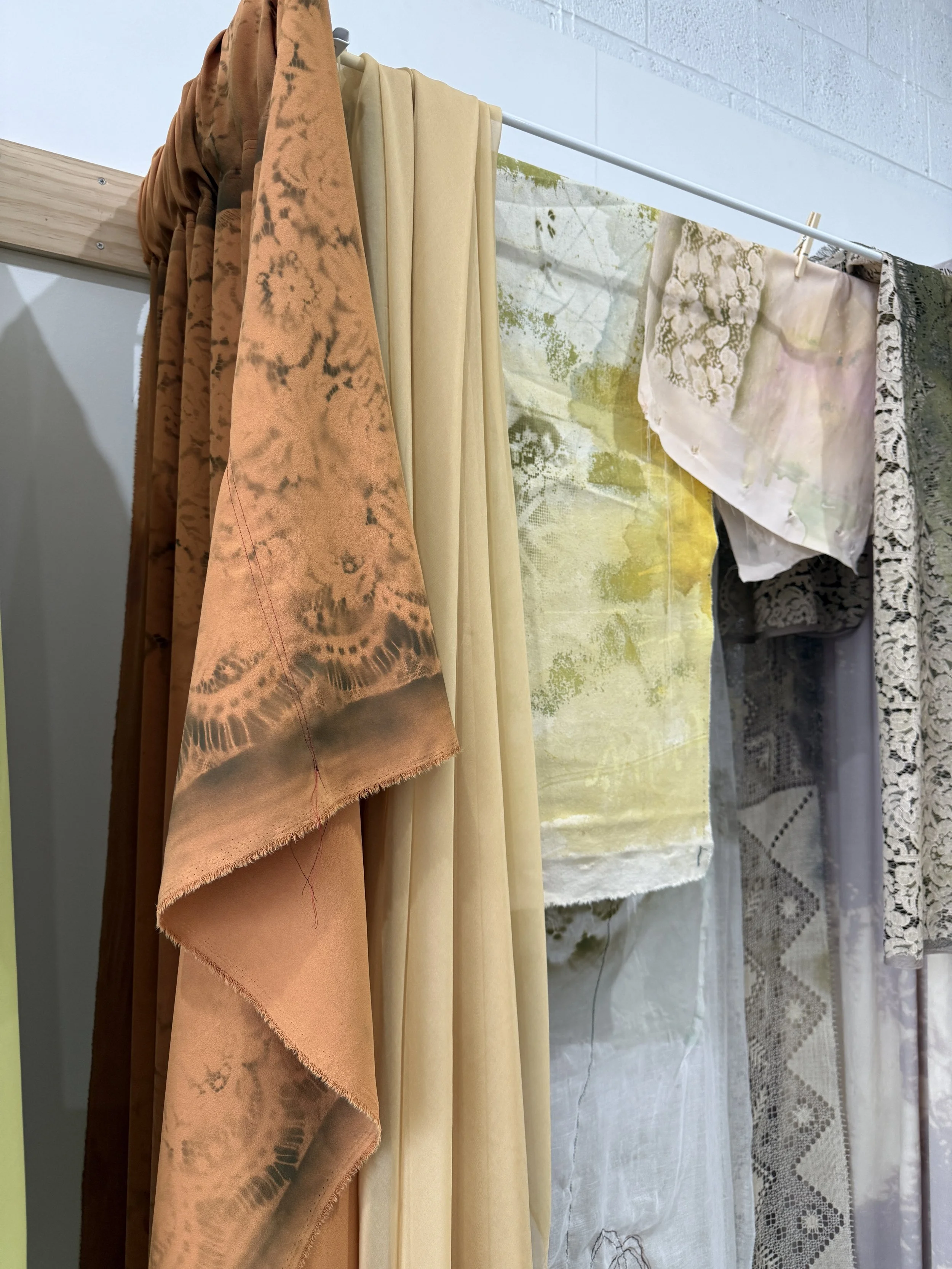
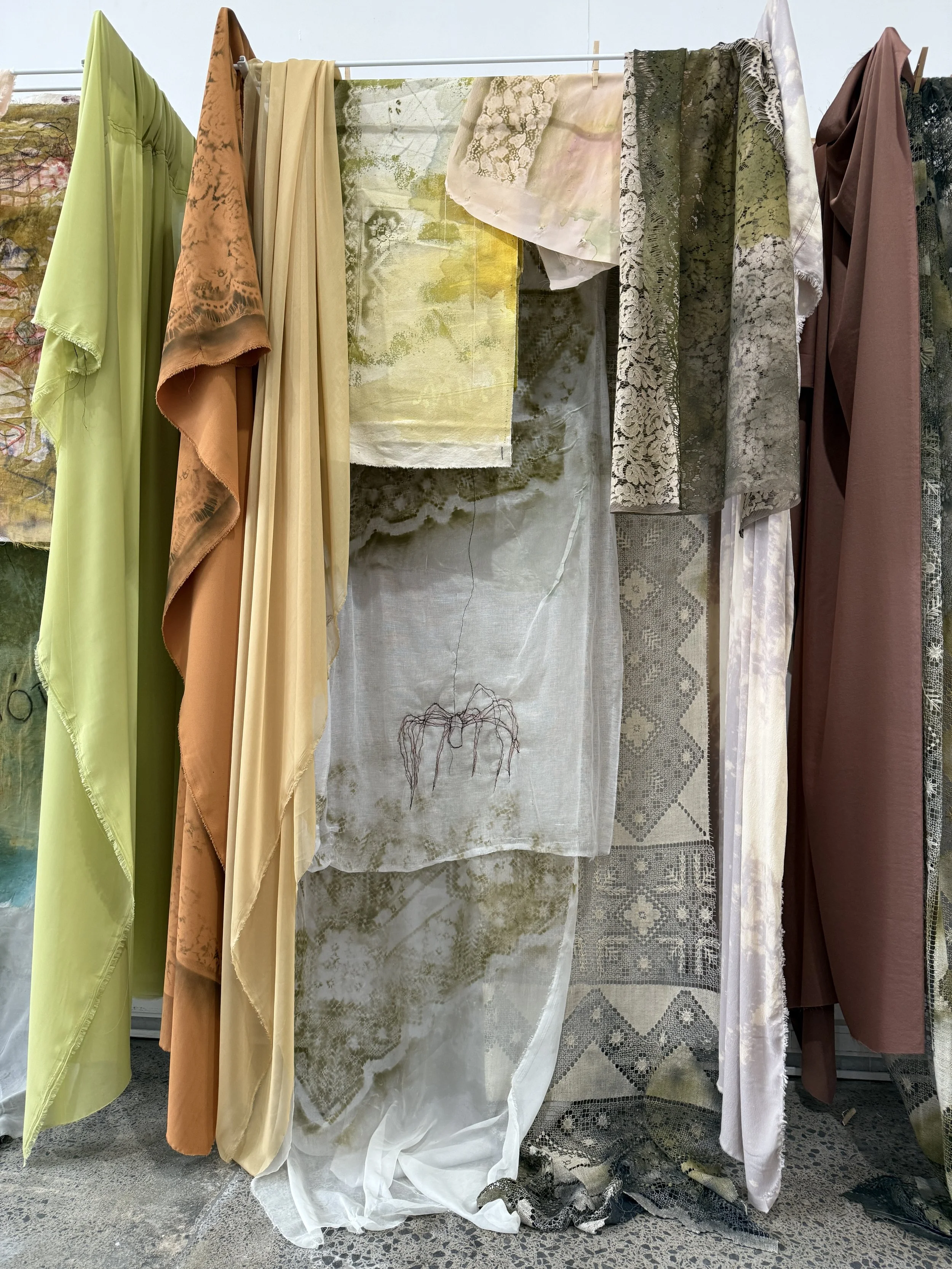
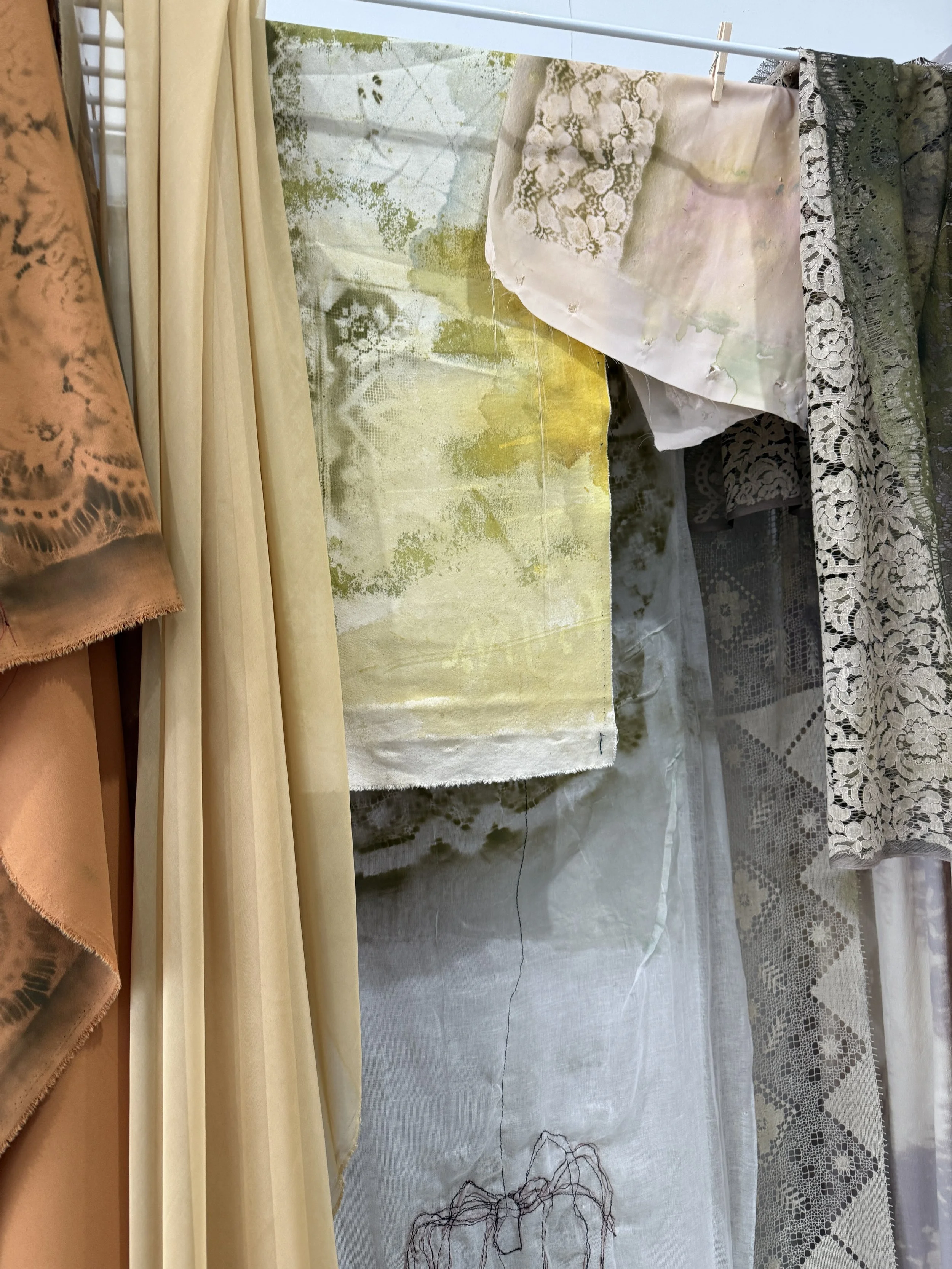
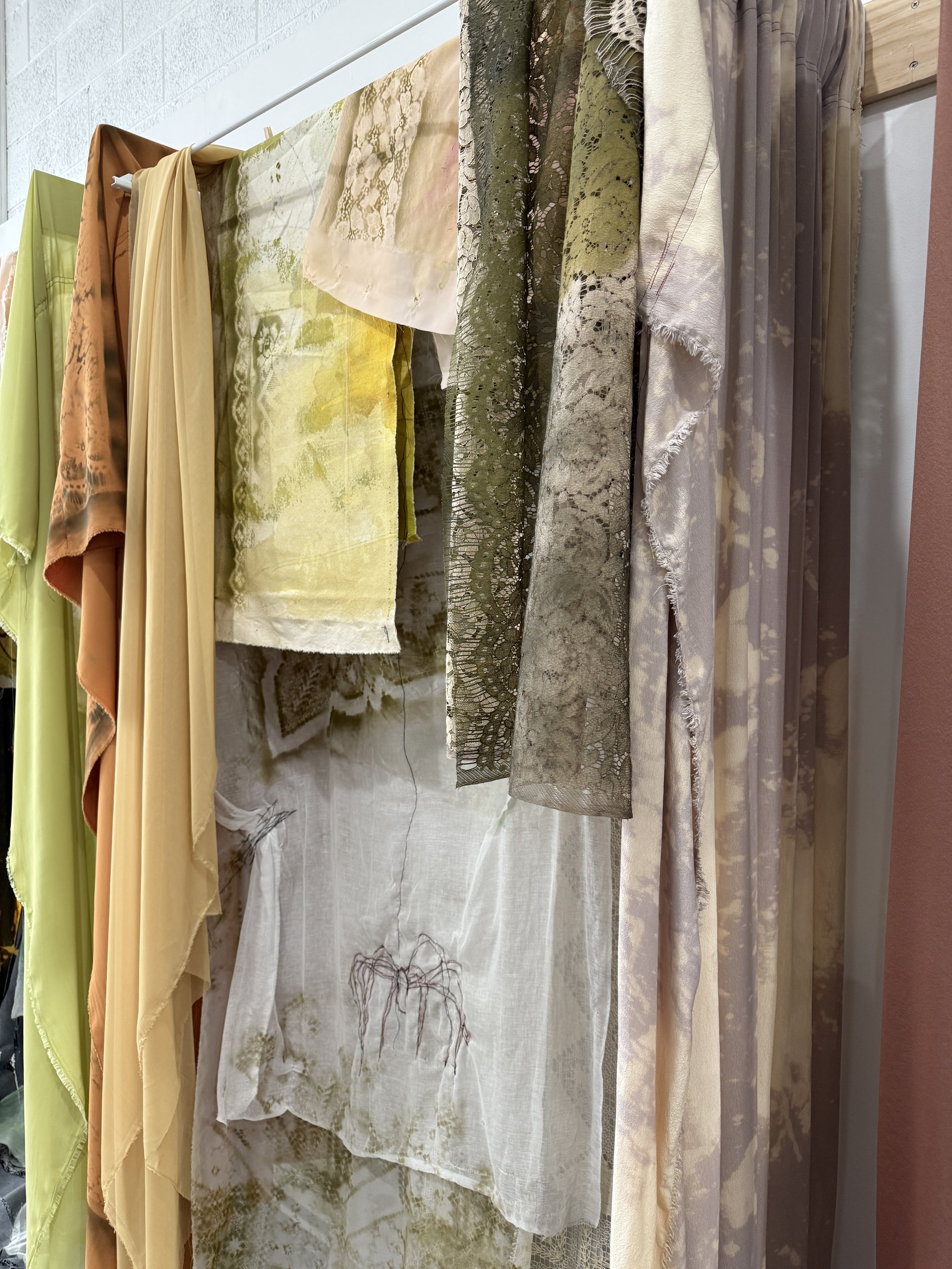
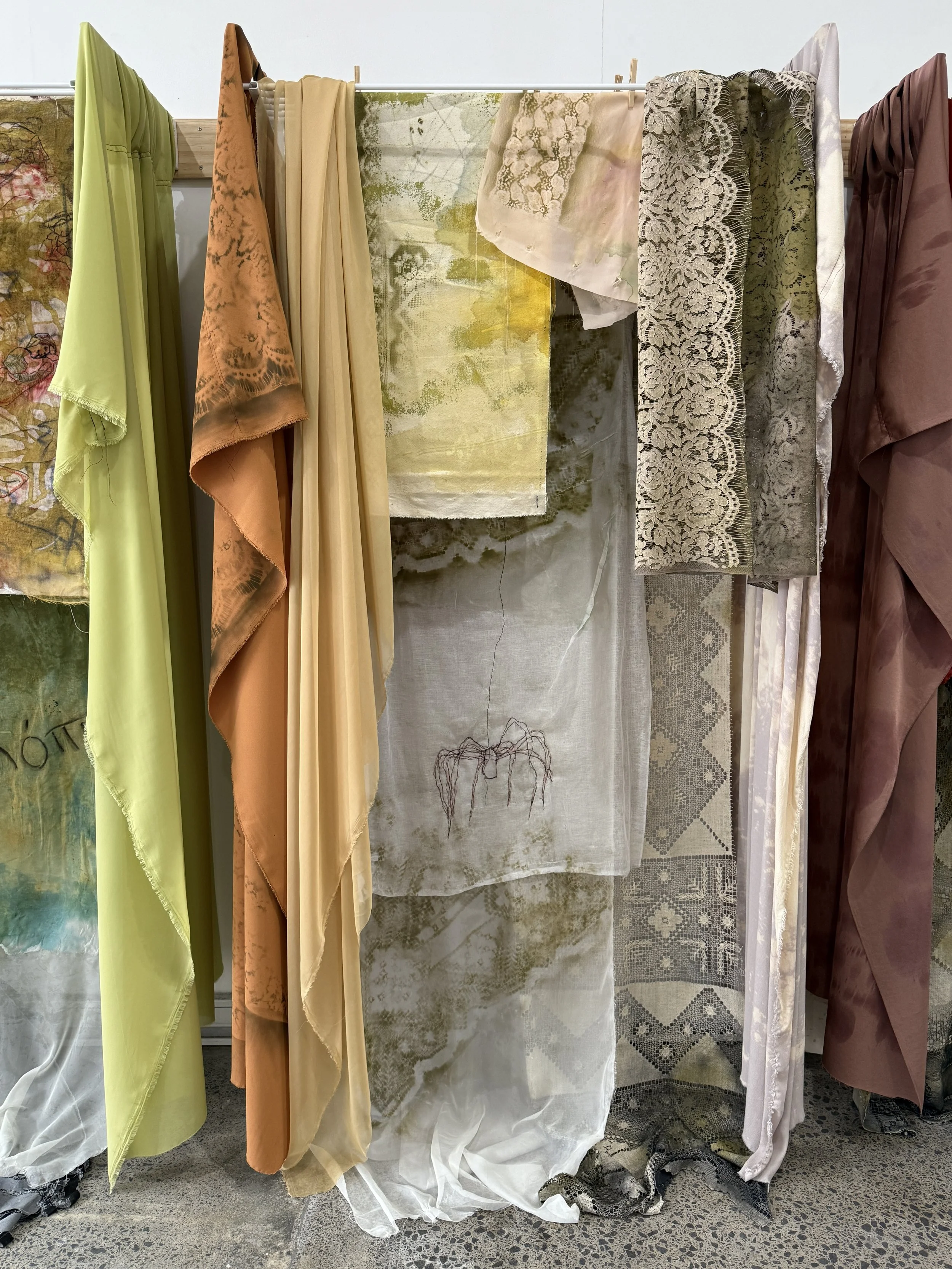
Initial hang with the three clothes racks. Spacing okay, need to cut down wooden supports so they don’t show either end. And paint white so they disappear into the wall. In order to hide the clothes racks, I need to arrange hanging fabric around the white metal. And perhaps get rid of the pegs or “age” the pegs, or overuse the pegs. (Also, pegs used to prop up the other paintings in conversation with these). Three women who communicated through weaving because they weren’t able to voice their concerns.
Penelope: widow, suitors, patriarchal system, queen but not King. Making and unmaking her shroud to avoid continuing on with the system. She had no voice, so she initiated a PAUSE but unravelling the shroud.
Arachne: Entered into a weaving competition with Athena (a god), produced a superior design (showing the of the frailty or failings of the gods), and was condemned to forever weave by being turned into a spider.
Philomela: raped by her sister’s husband and then had her tongue cut out to silence her. She wove a tapestry and sent it to her sister to tell of the crime. Then was changed into a Nightingale. To sing a melancholy song.
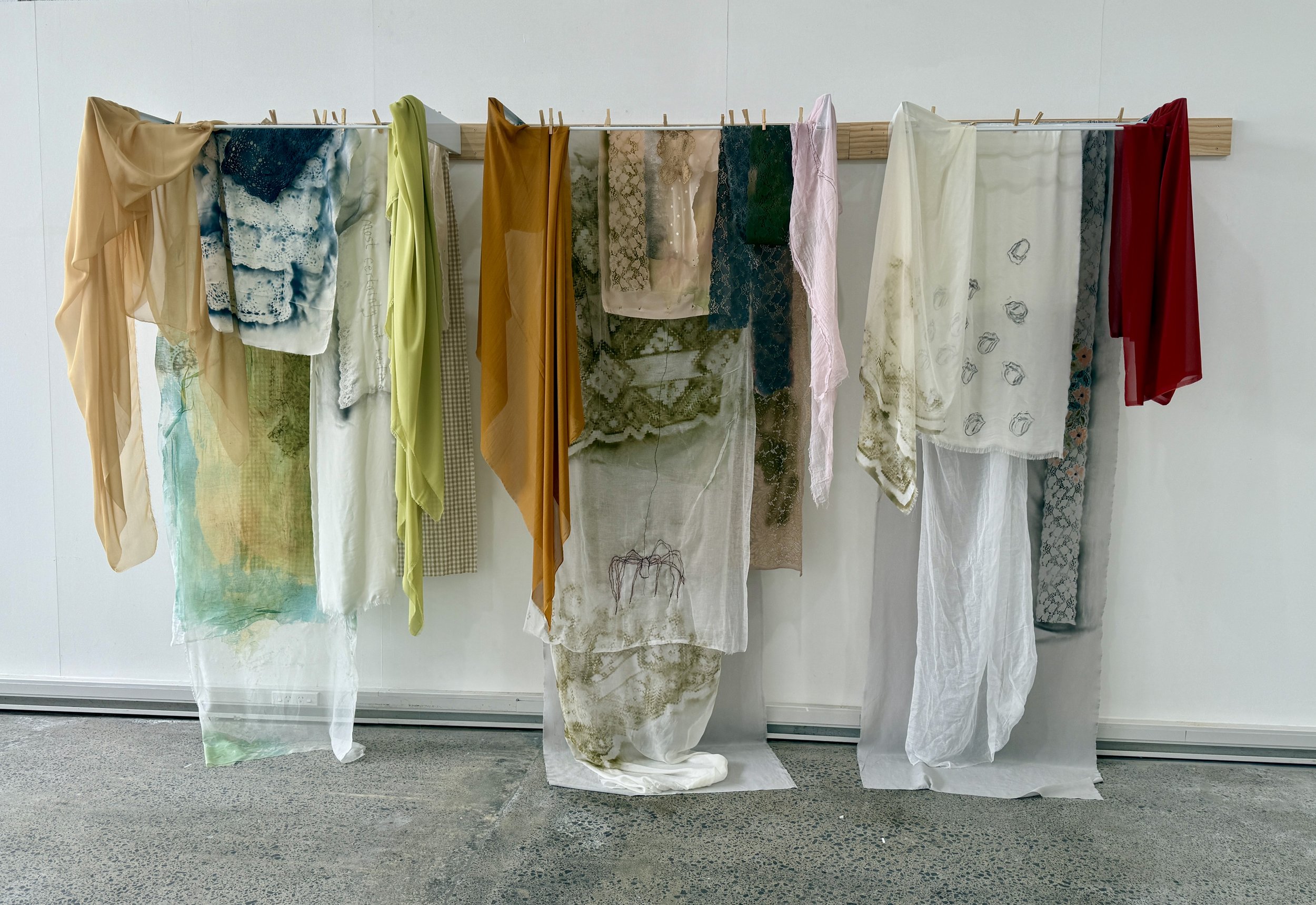
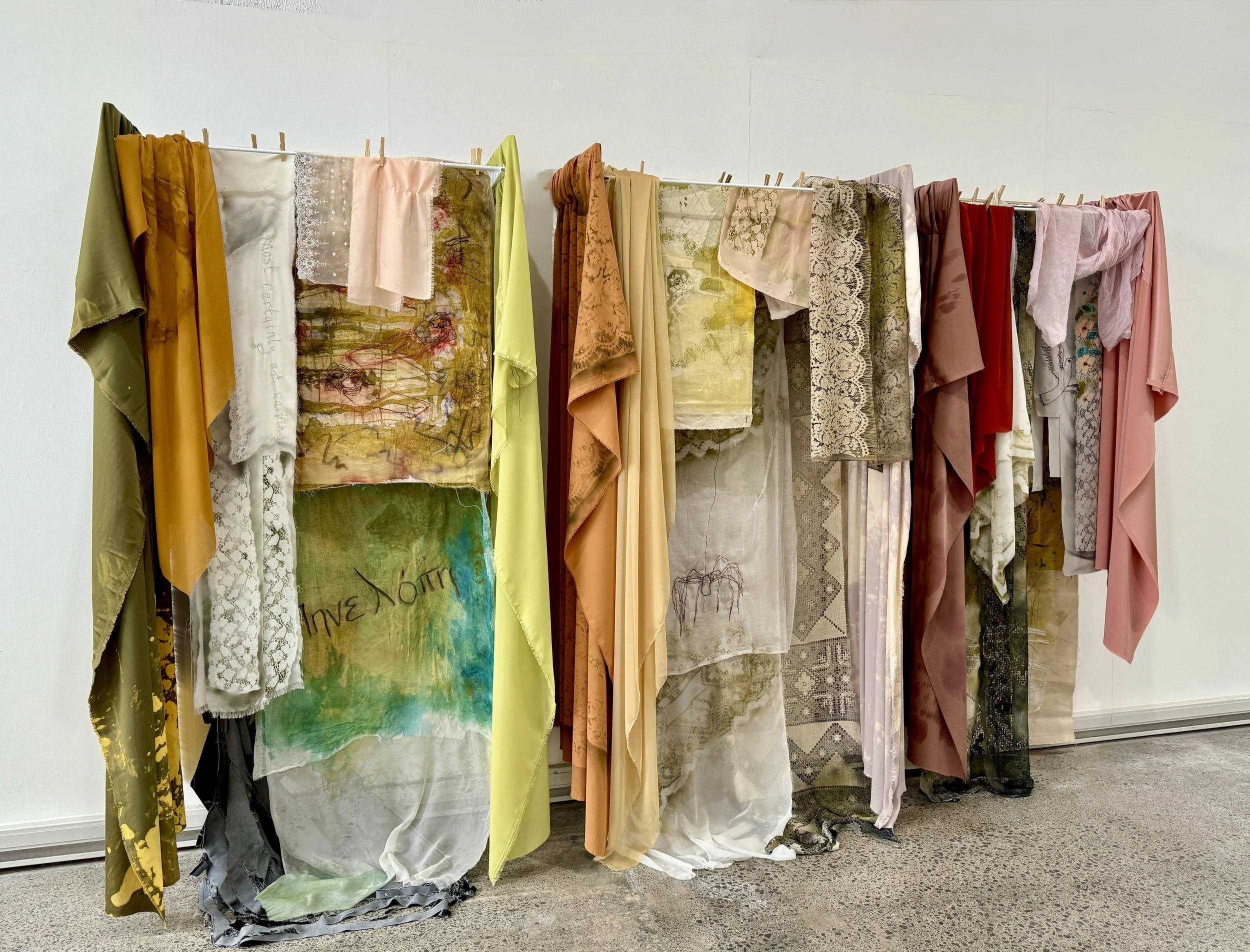
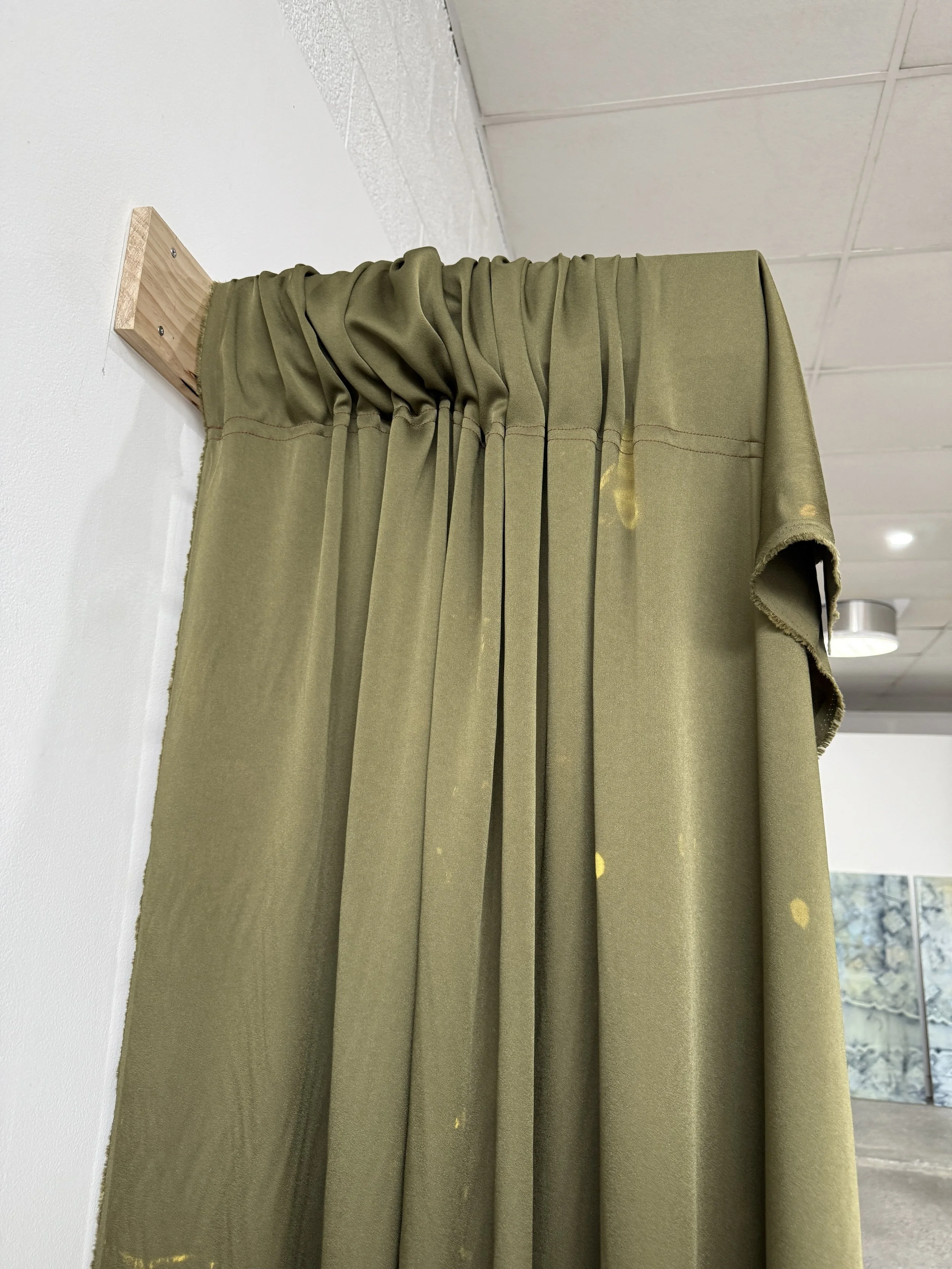
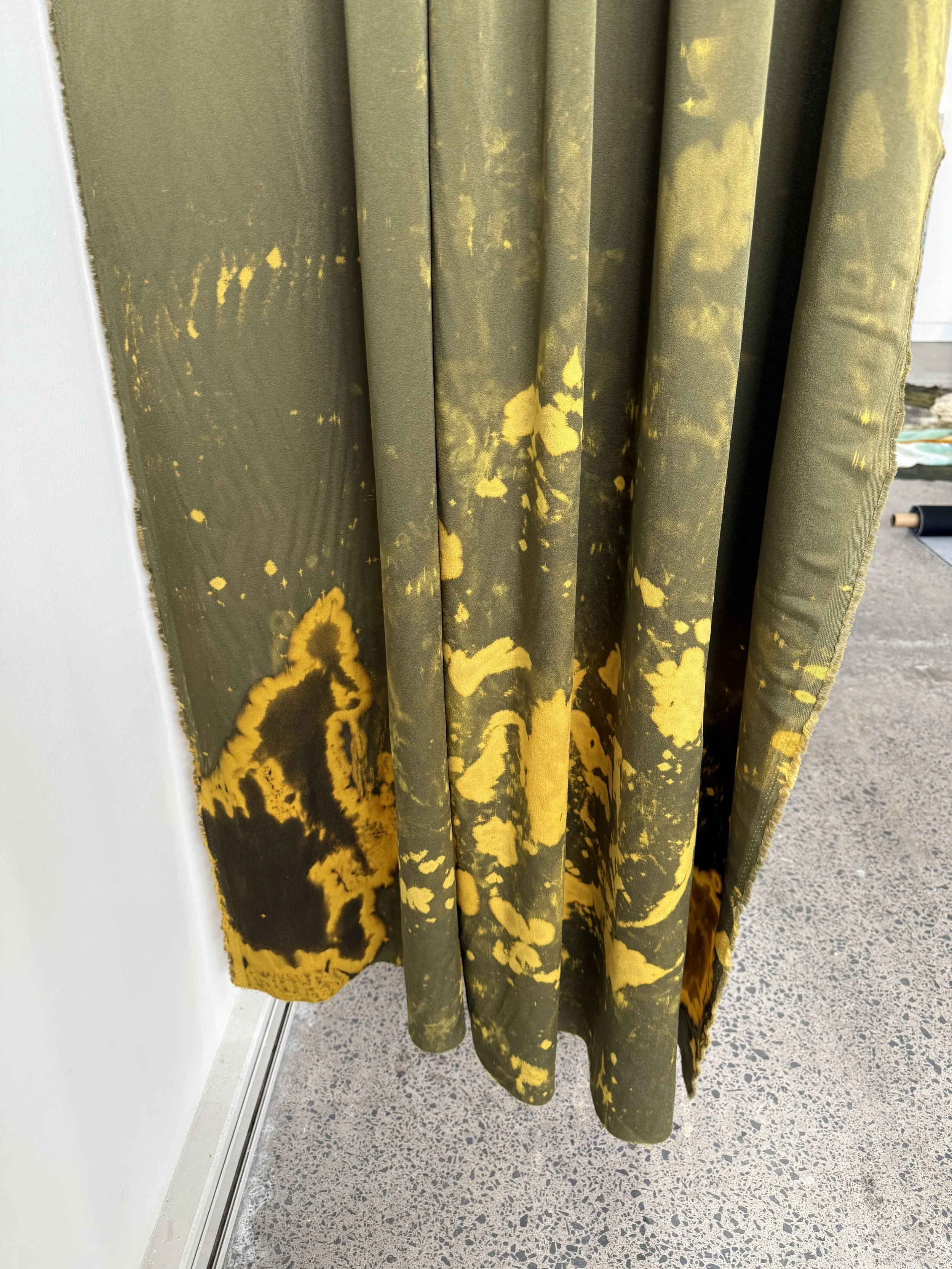
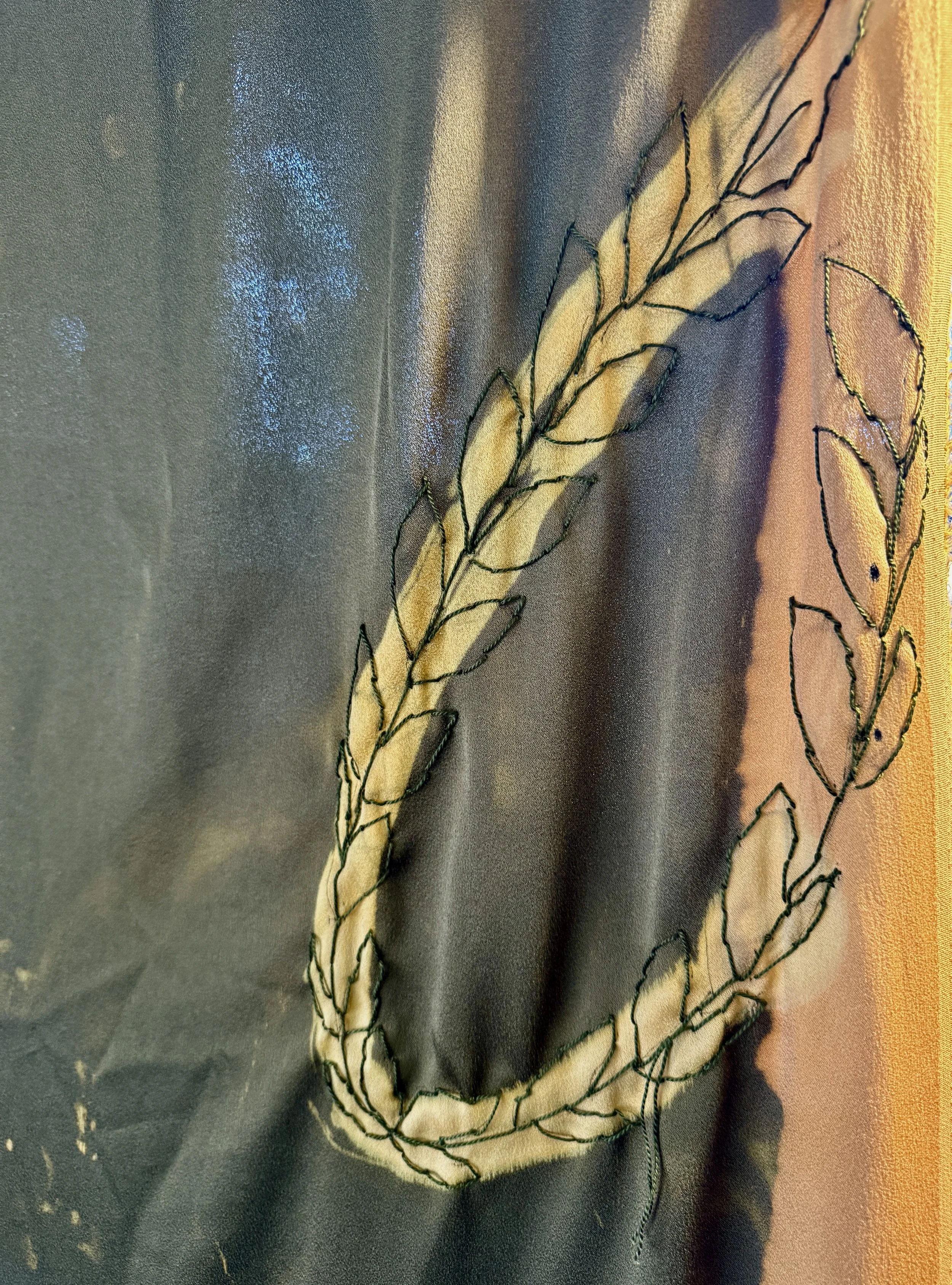
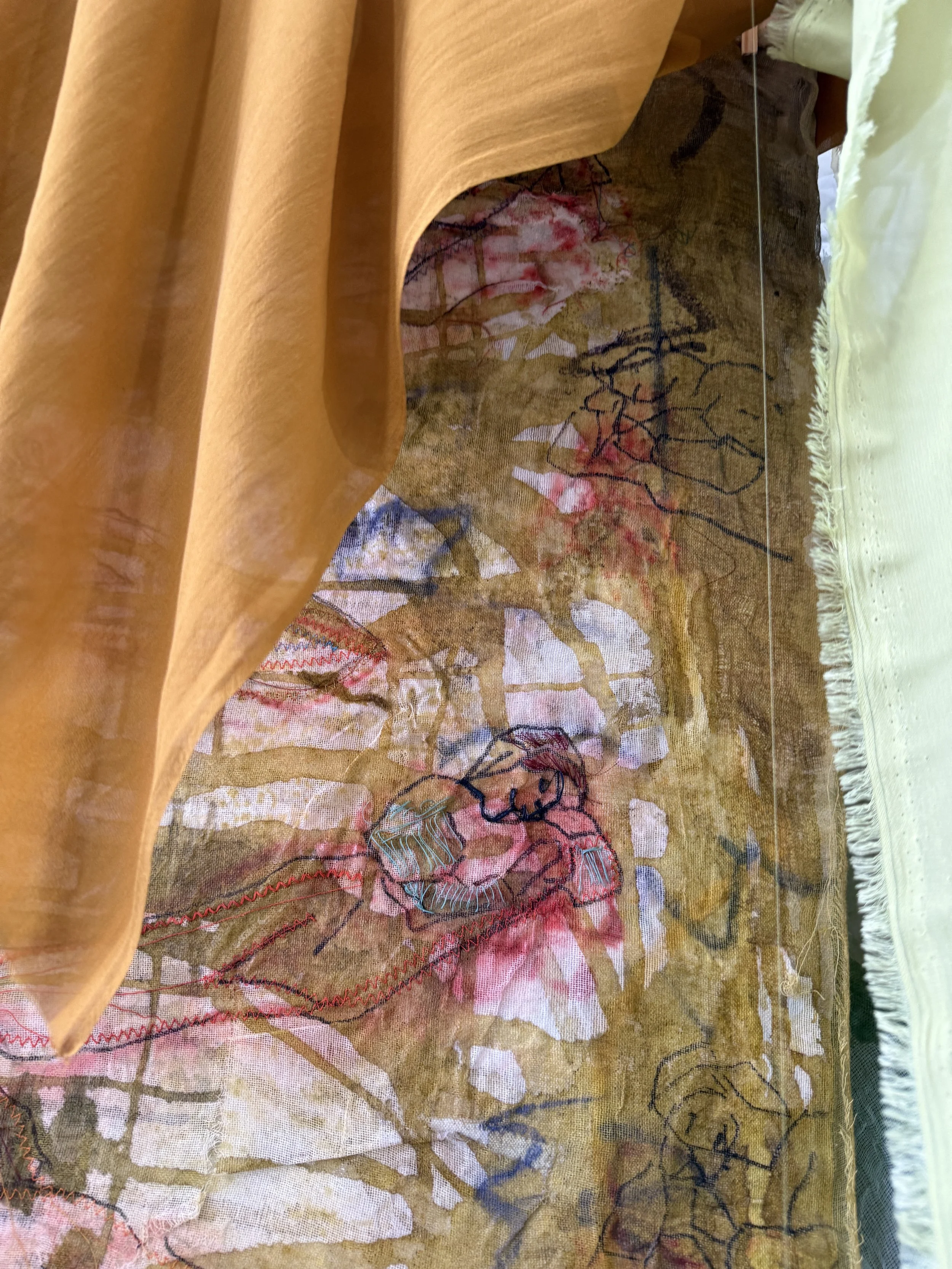
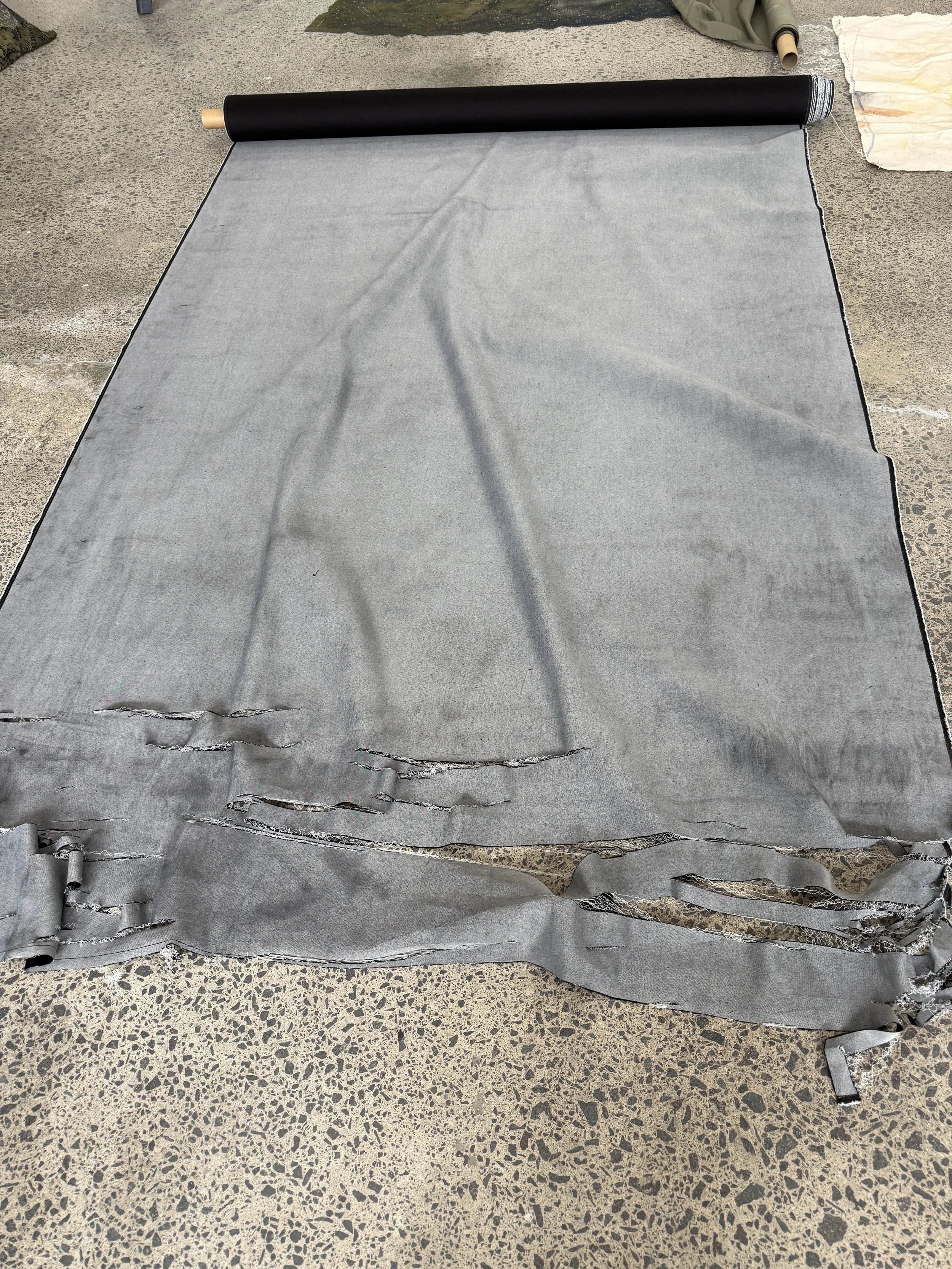
PENELOPE: I bought some more fabric to make curtains to cover the arms of the clothes rack. Influenced by Ruth Buchanan curtains sculpture. Then I splashed some bleach on the fabric and watched the green turn to bright gold. I painted a greek vase onto the burnt orange silk but this didn’t really hang well so I just used it as a colour accent in the piece. I used an old work which showed Penelope sleeping, I had outlined he image with felt tip and then stitched the image onto the canvas. I repeating design to make it look like dress fabric or wallpaper. The fabric house was getting rid of some faulty rolls of fabric. There was one black/grey roll which kept splitting. It looked like unravelled tapestry, it was perfect to back the piece and trail on the ground. I then chalked the name of Penelope in Ancient Greek onto one of the dyed fabric hangings. Like a Penelope tag. And then further shredded and spray painted the fabric which had the line “most certainly not waiting” from Carol Ann Duffy’s poem, Penelope. It resembled a clothing booth when finished.
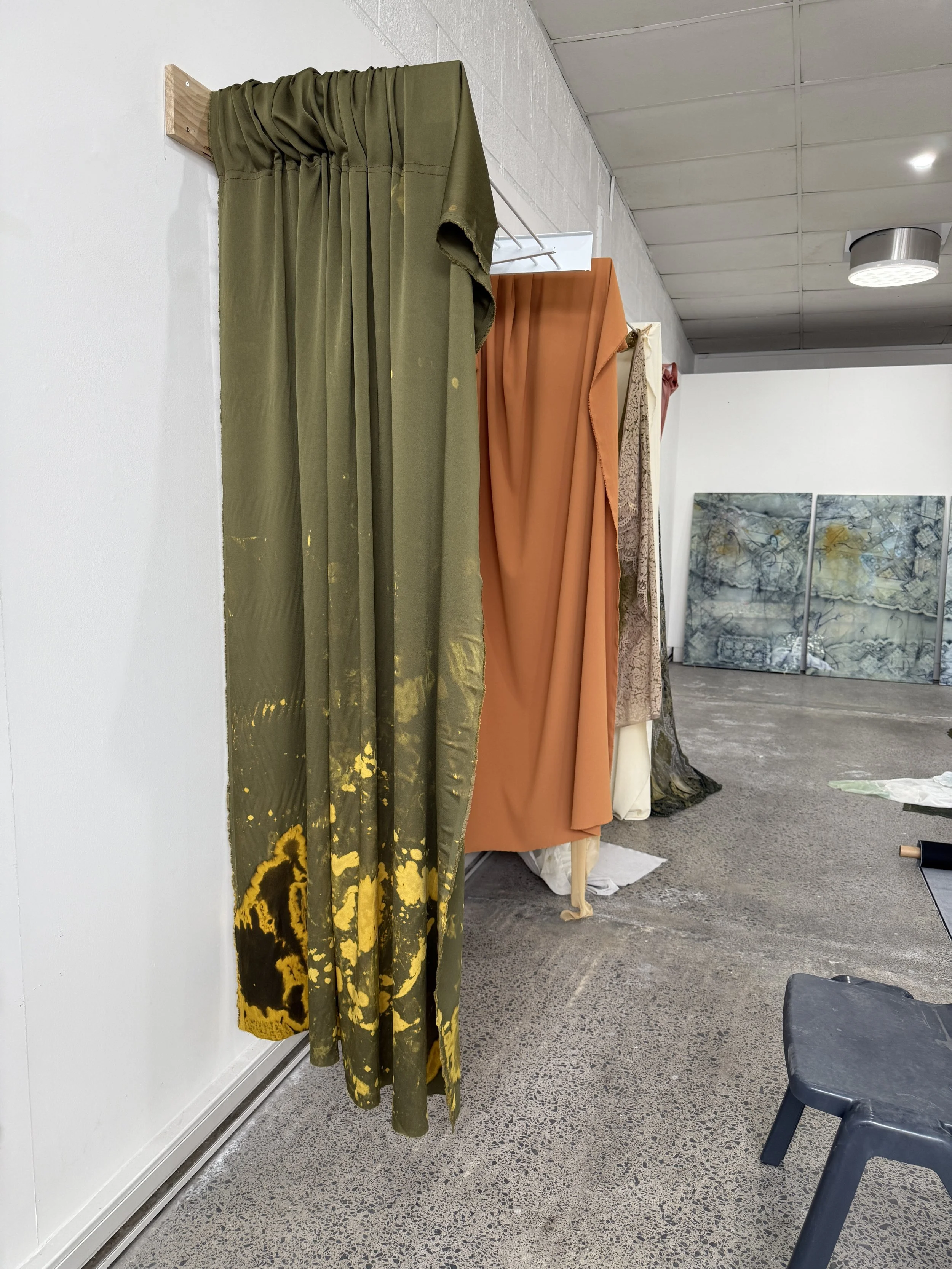
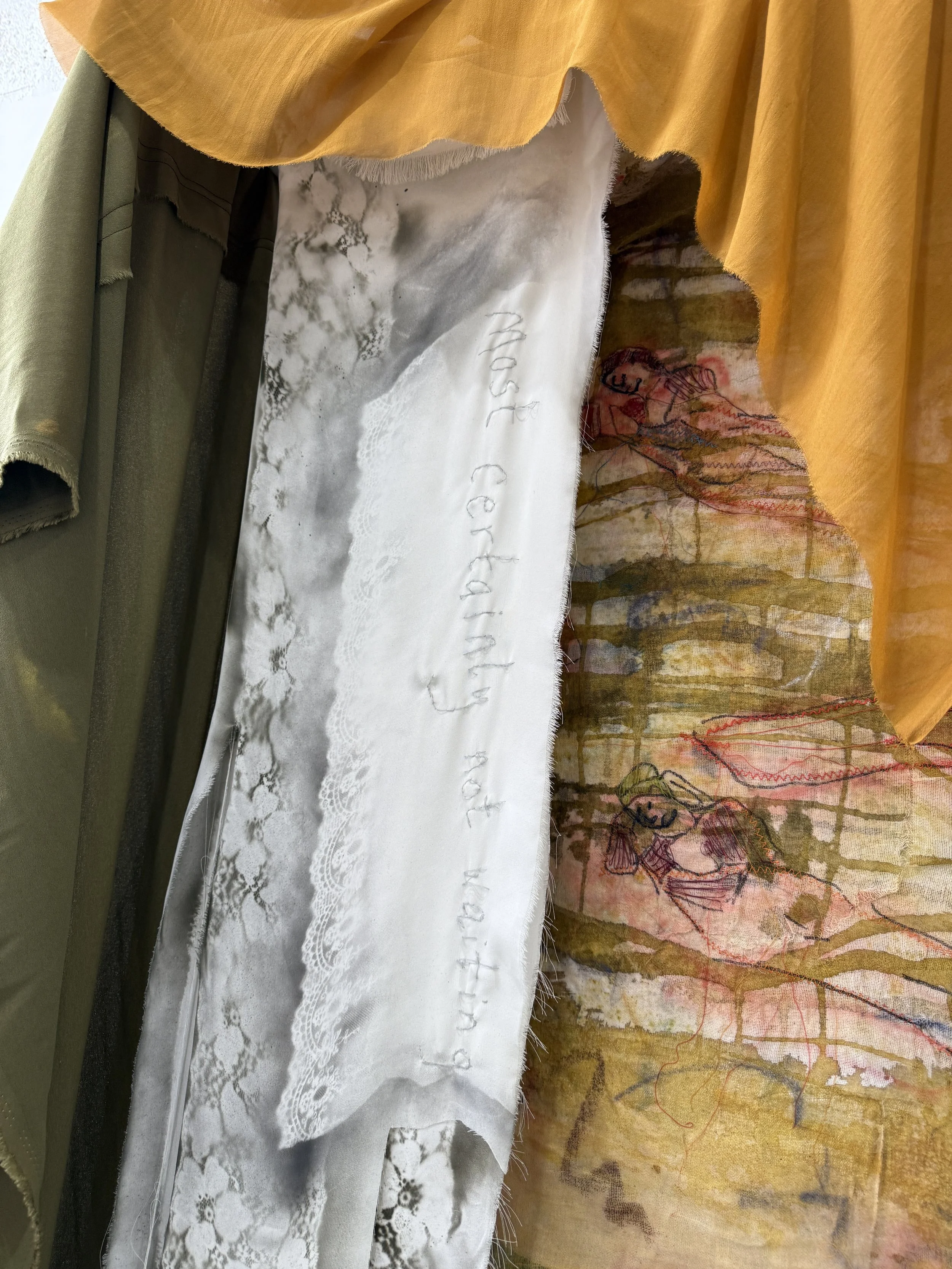
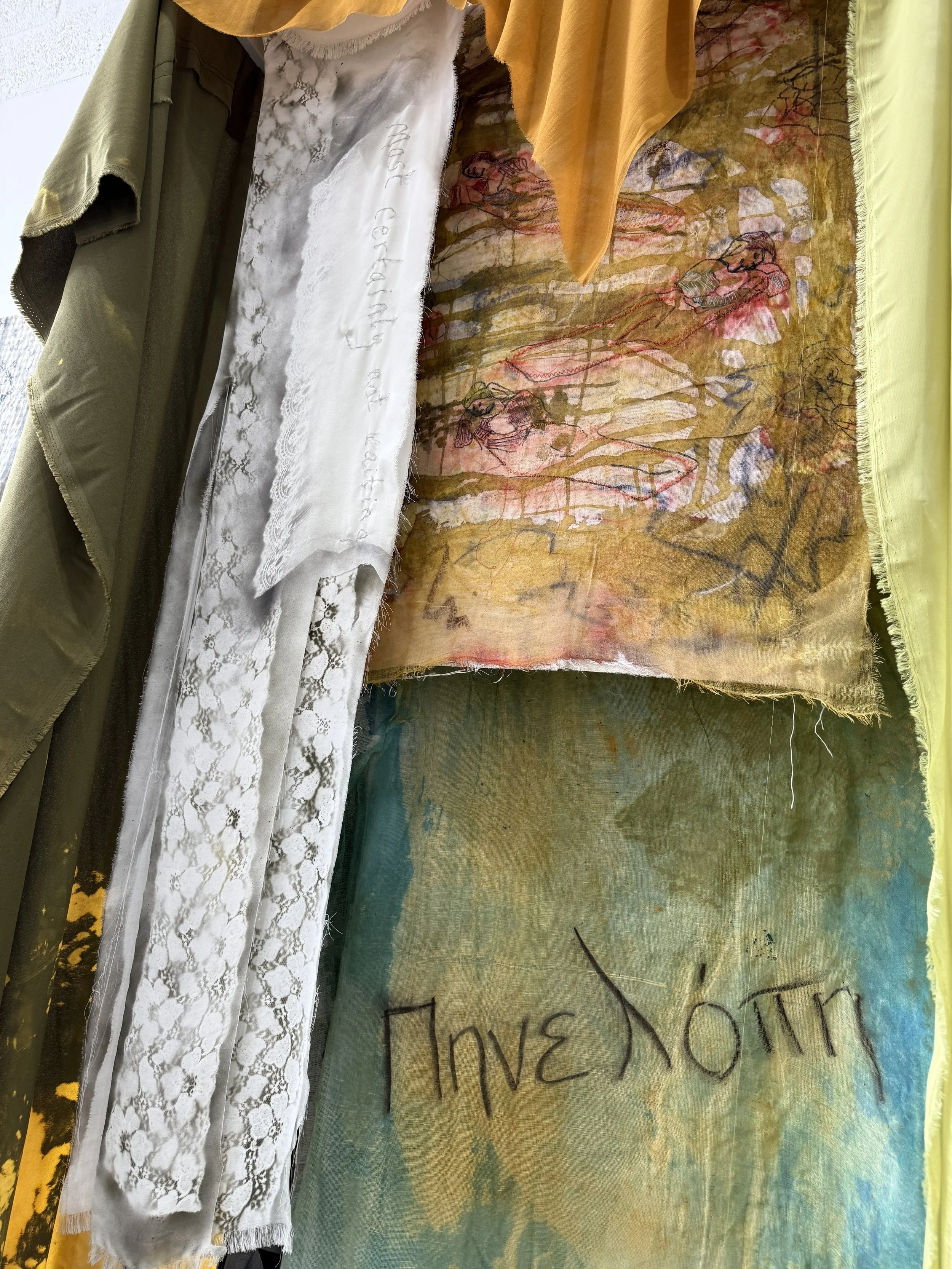
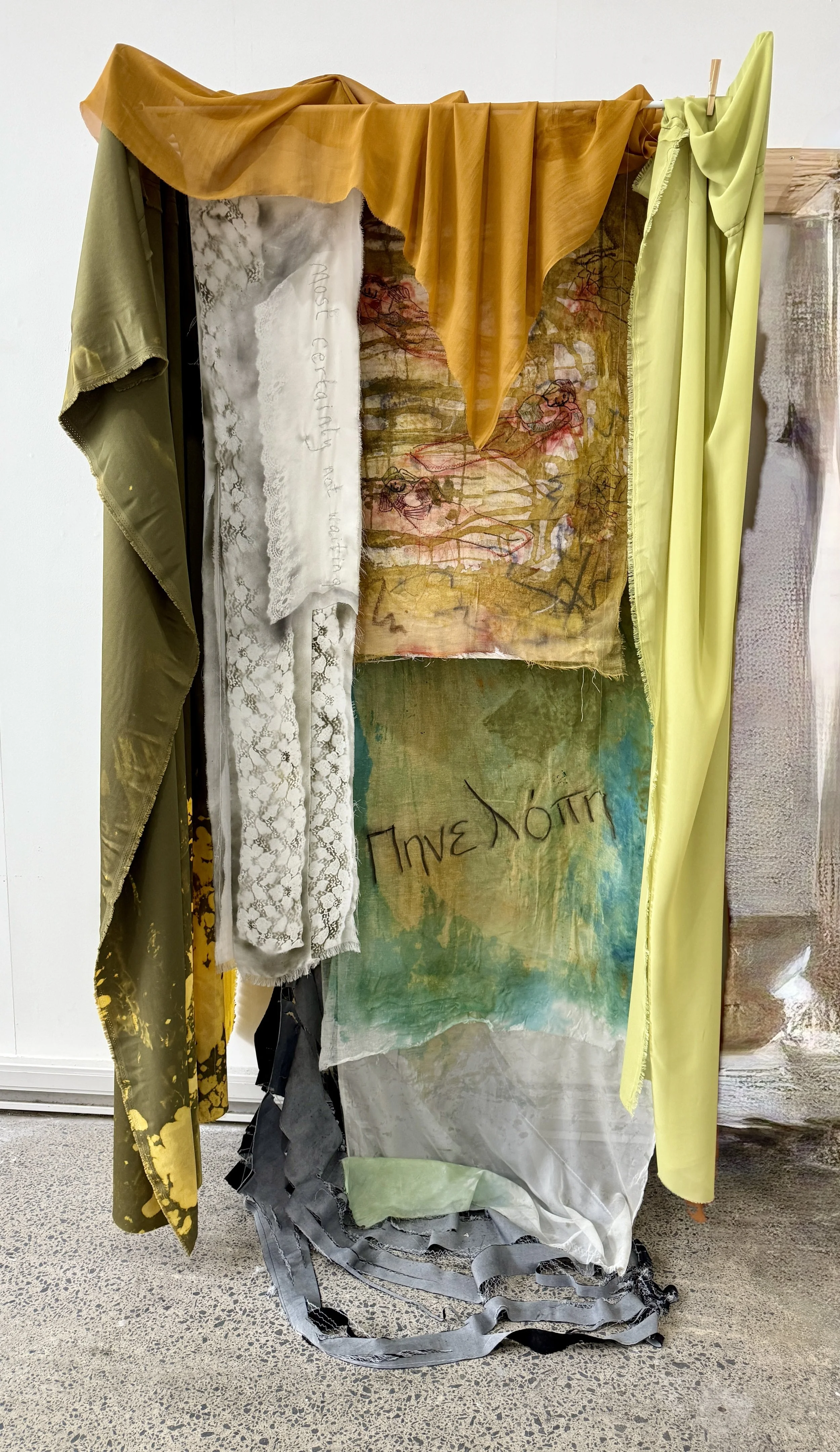
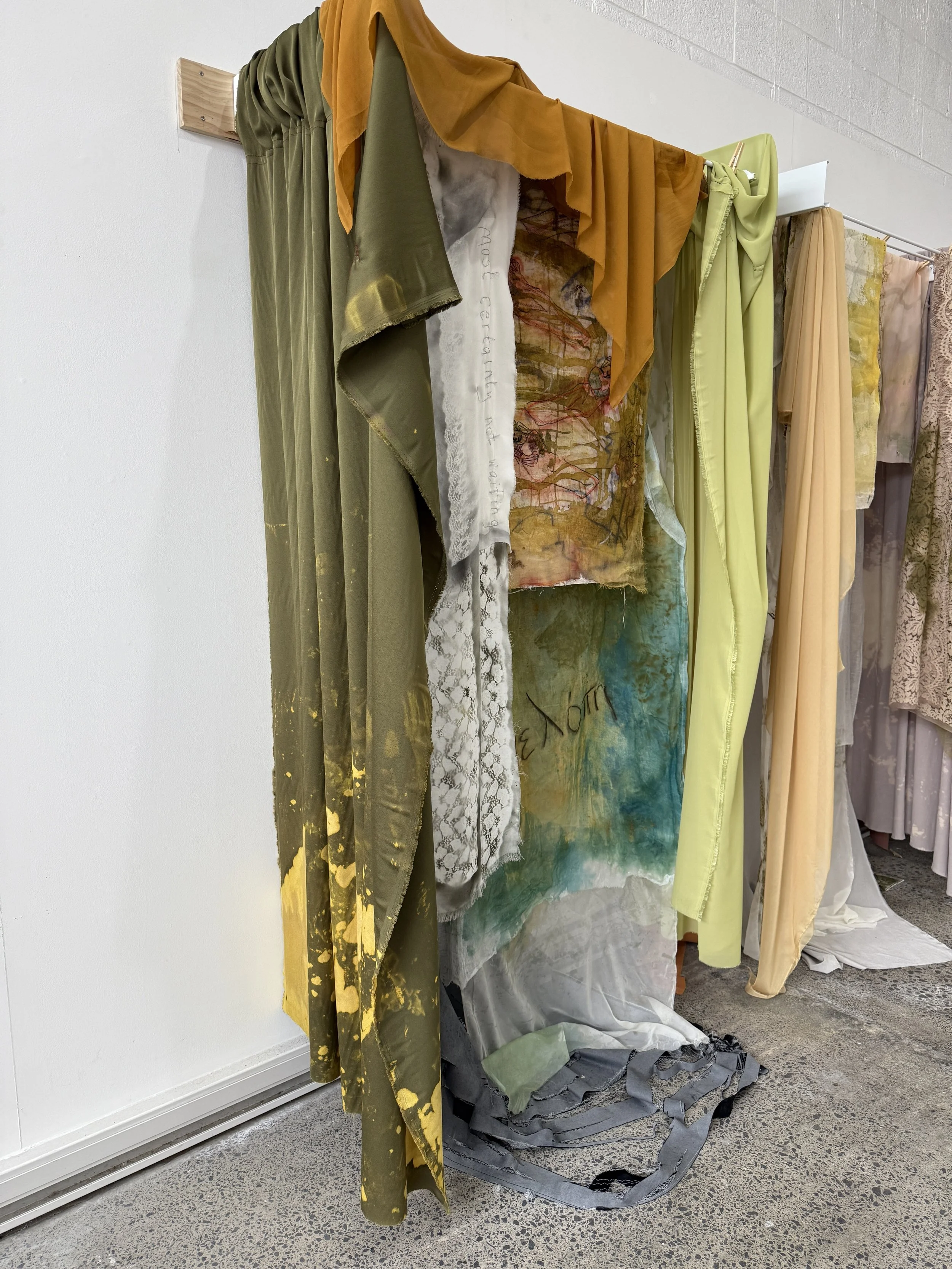
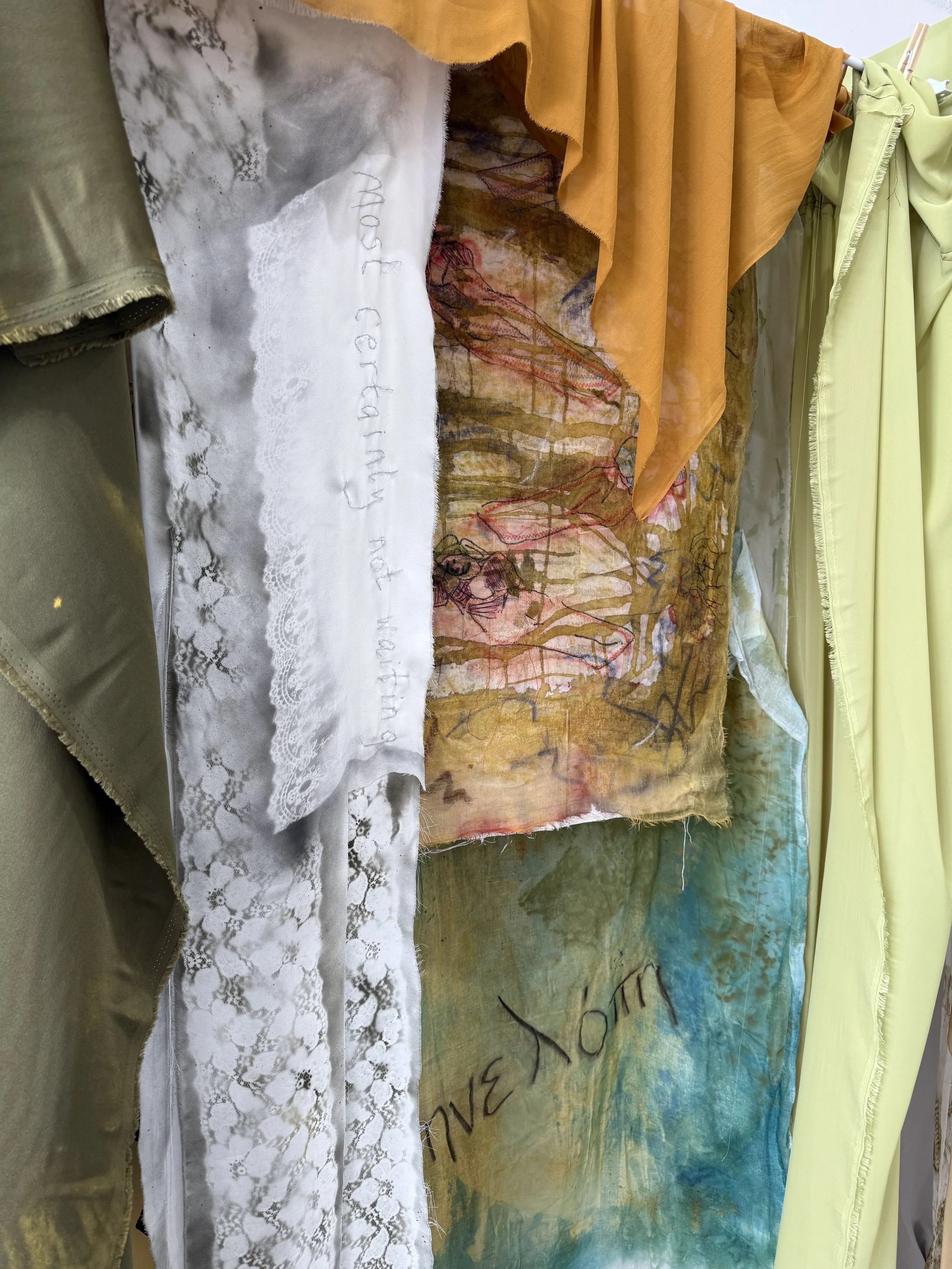
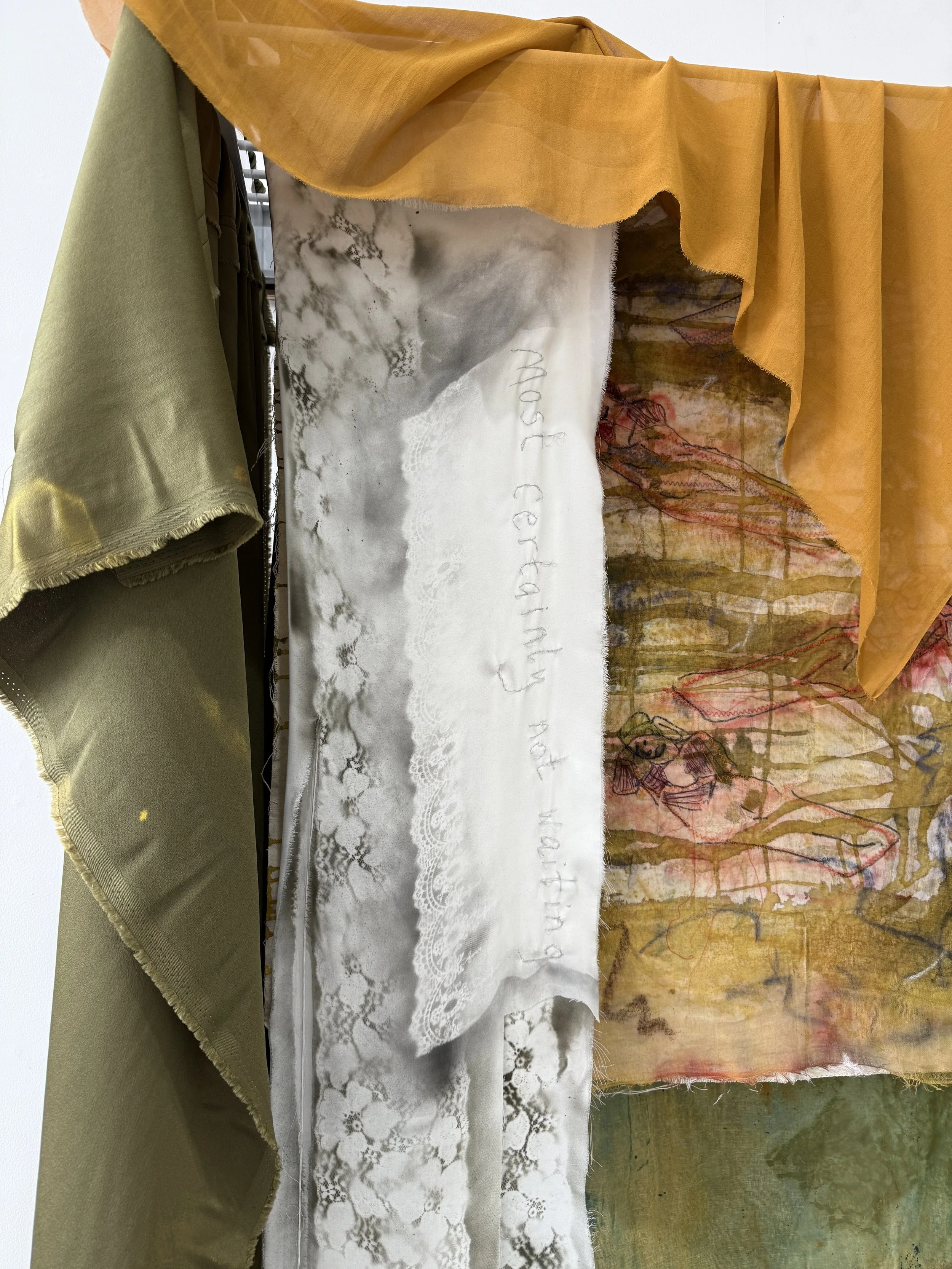
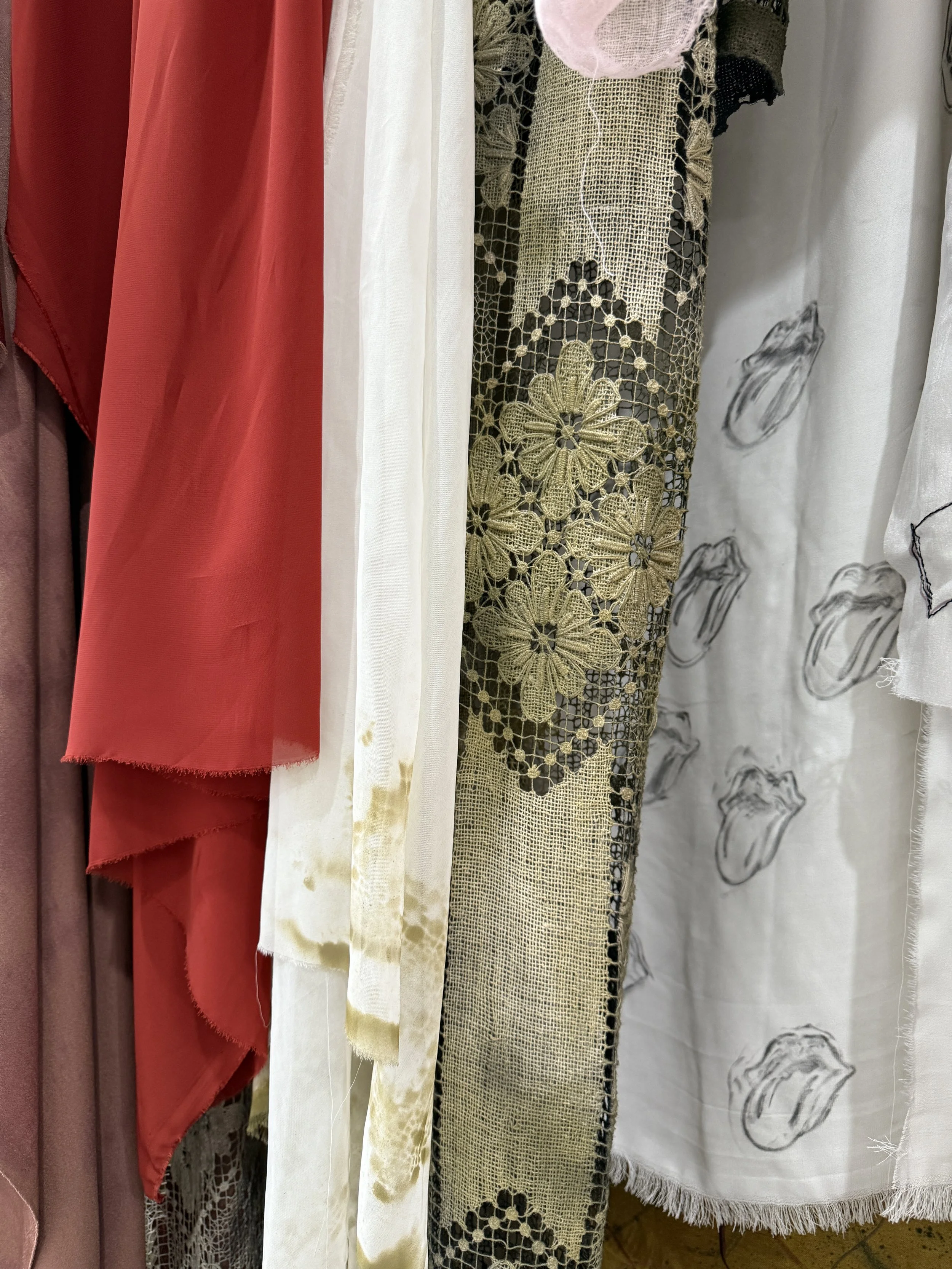
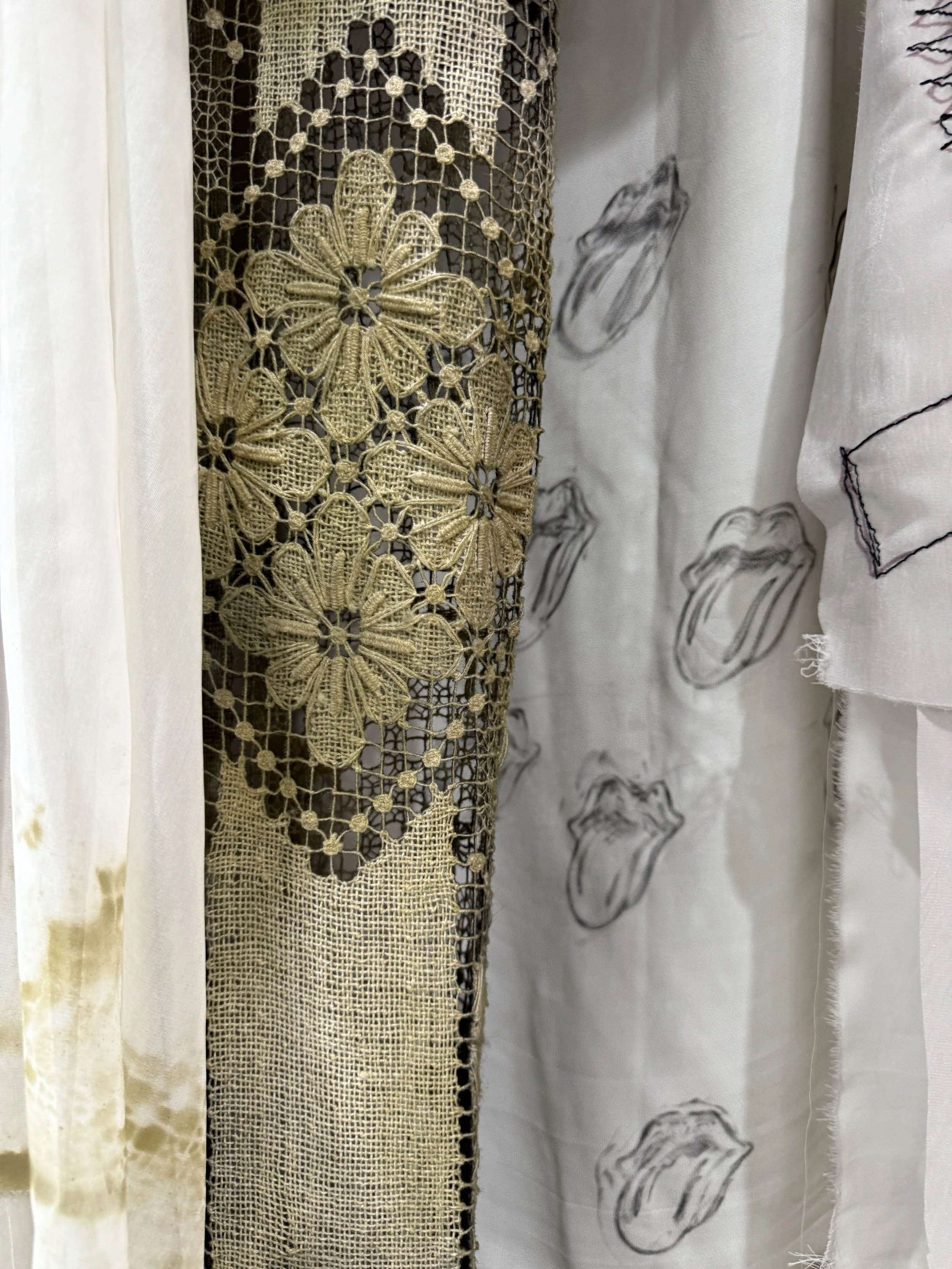
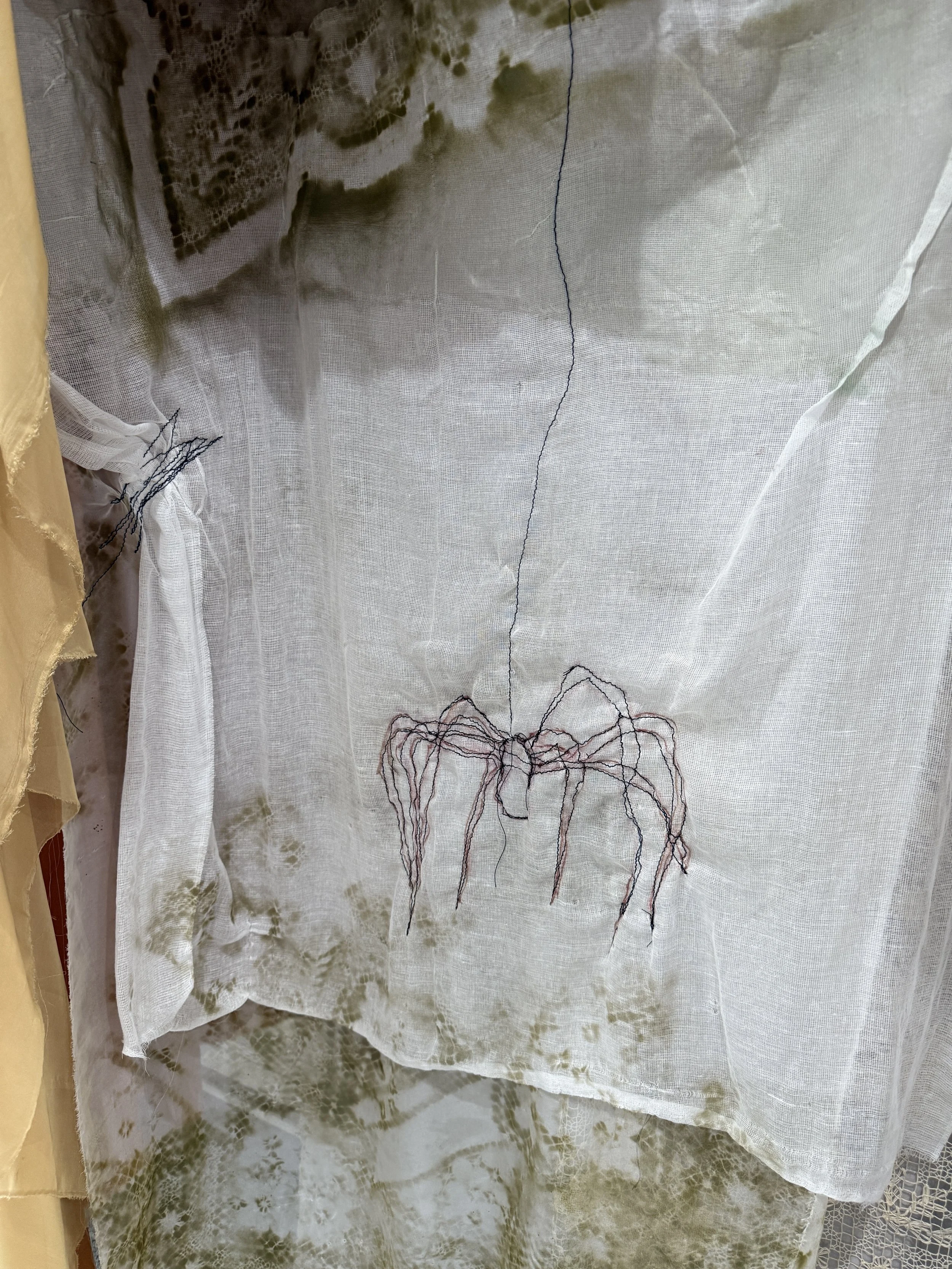
ARACHNE: Again I made some curtains to go along either side of the clothes rack arms, this time spray painting using lace as a stencil and then using that lace as a hanging piece. I also used a ripped up piece of canvas from a previous work that looked like tapestry and another piece of fabric which I had glued to a small painted canvas and then removed - it had some interesting staining on it. The spider motif in the style of Louise Bourgeois’s Maman sculpture stitched by machine into a Mull fabric and polyester hanging.
Thinking of hand stitching two lines from this poem: (The moon once pulled blood from me. Now I pull silver. Here are the lines I pulled from my own belly –)
It is no punishment. They are mistaken –
The brothers, the father. My prayers were answered.
I was all fingertips. Nothing was perfect:
What I had woven, the moths will have eaten;
At the end of my rope was a noose's knot.
Now it's no longer the thing, but the pattern,
And that will endure, even though webs be broken.
I, if not beautiful, am beauty's maker.
Old age cannot rob me, nor cowardly lovers.
The moon once pulled blood from me. Now I pull silver.
Here are the lines I pulled from my own belly –
Hang them with rainbows, ice, dewdrops, darkness.
AE Stallings Oxford Professor of Poetry 2023-27, American poet A.E. Stallings' work is known for sharp wit, inventiveness, and using classical references to talk about modern life.
From - https://podcasts.ox.ac.uk/series/poetry-ae-stallings
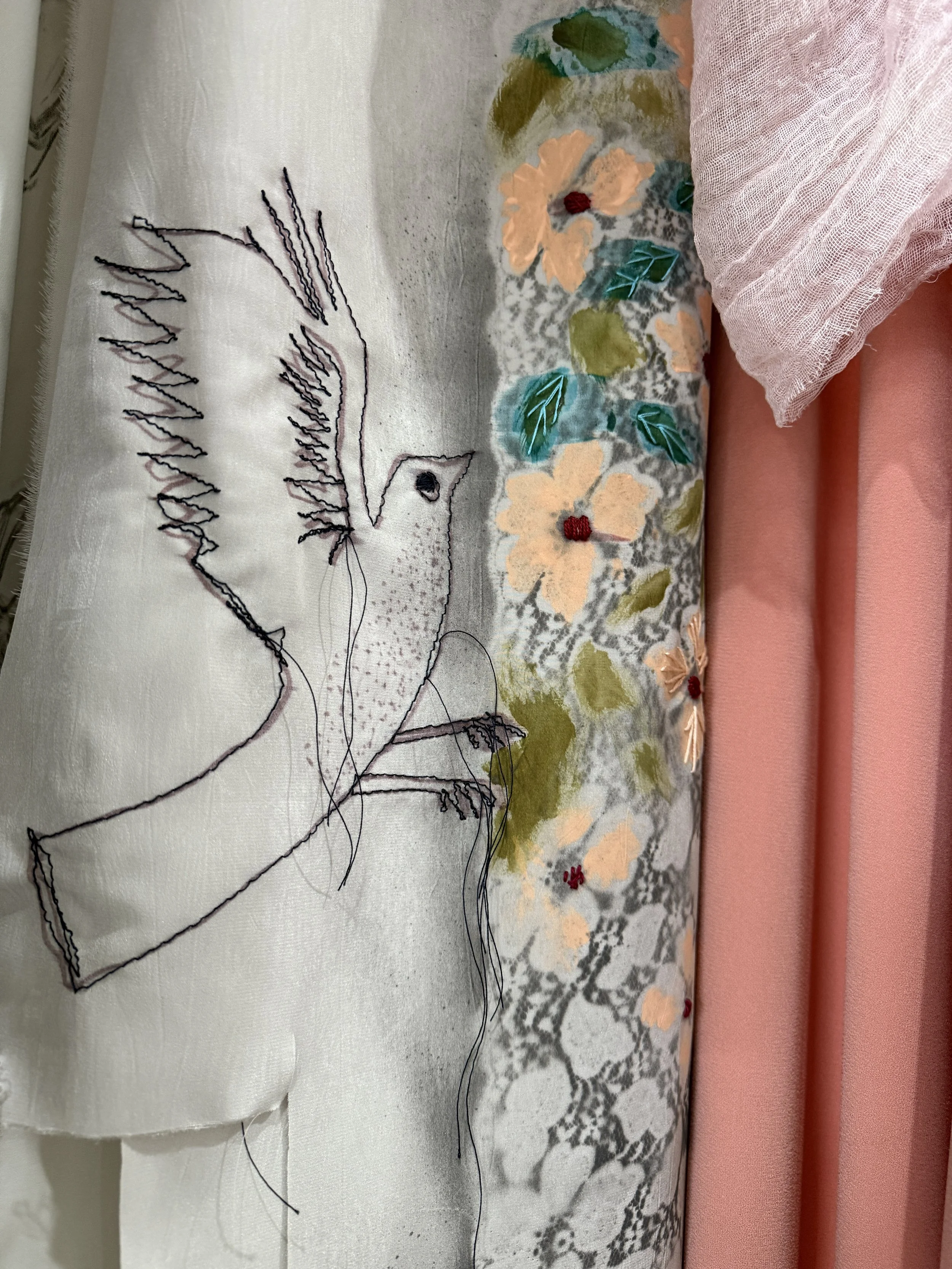
PHILOMELA: Rolling Stones motif ‘tongue’ - I bought lots of these as iron on patched and then made rubbings of them onto polyester fabric. I like the idea of the commercialised image, repeated. Like Andy Warhol’s Soup Cans, 1962. This represents Philomela’s cut-out tongue to prevent her talking about her sexual assault. Also the hand stitching of the Nightingale, an image taken from an ancient Italian fresco, probably from Pompeii. The red material symbolising the sexual trauma and blood.
From T. S. Elliot’s The Waste Land, 1921, Part II, A Game of Chess - sourced from https://eliotwasteland.blogspot.com/p/blog-page_7.html
Above the antique mantel was displayed
As though a window gave upon the sylvan scene
The change of Philomel, by the barbarous king
So rudely forced; yet there the nightingale
Filled all the desert with inviolable voice
And still she cried, and still the world pursues,
“Jug Jug” to dirty ears.
The INVIOLABLE VOICE.